Wavefront
Nature of LightLight is a type of energy which produces the sensation of vision. The question is how light transmits energy from one point to another, as a wave or as a stream of particles. | |
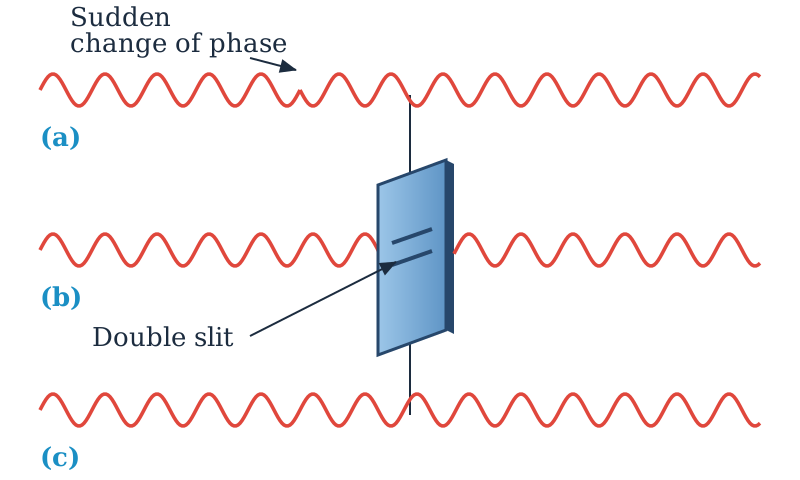
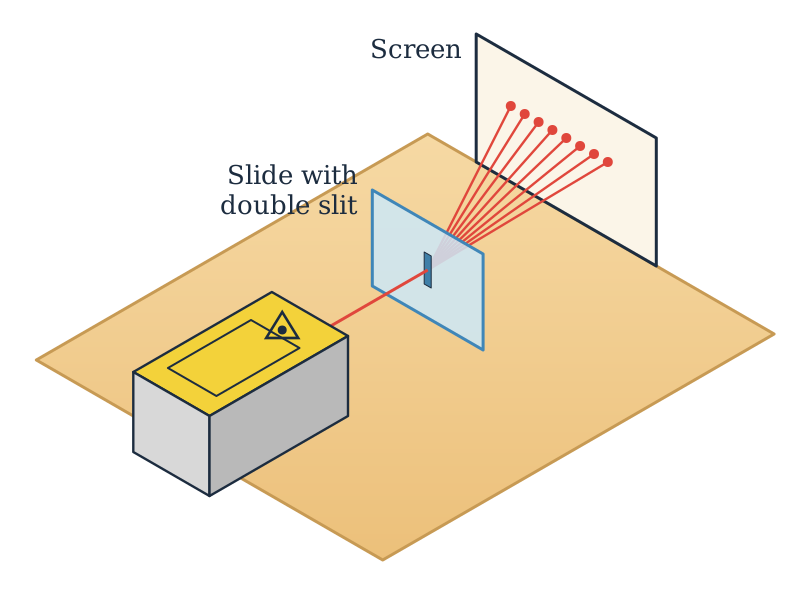
Wave TheoryIn about 1678 Huygens, an eminent Dutch scientist, proposed that light energy from a luminous source travels in space by means of wave motion. Young’s interference experiment, performed in 1801, proved the wave nature of light and established Huygens’ wave theory. | |
Electromagnetic WavesIn 1860 Maxwell proposed that light consists of electromagnetic waves. Oscillating electric charges produce changing electric and magnetic fields that mutually regenerate each other and can propagate through vacuum. | |
Dual NatureIn the early twentieth century quantum mechanics revealed the dual nature of light. It propagates as an electromagnetic wave but interacts with matter as discrete, massless particles called photons. The wave theory still explains interference and diffraction successfully. | |
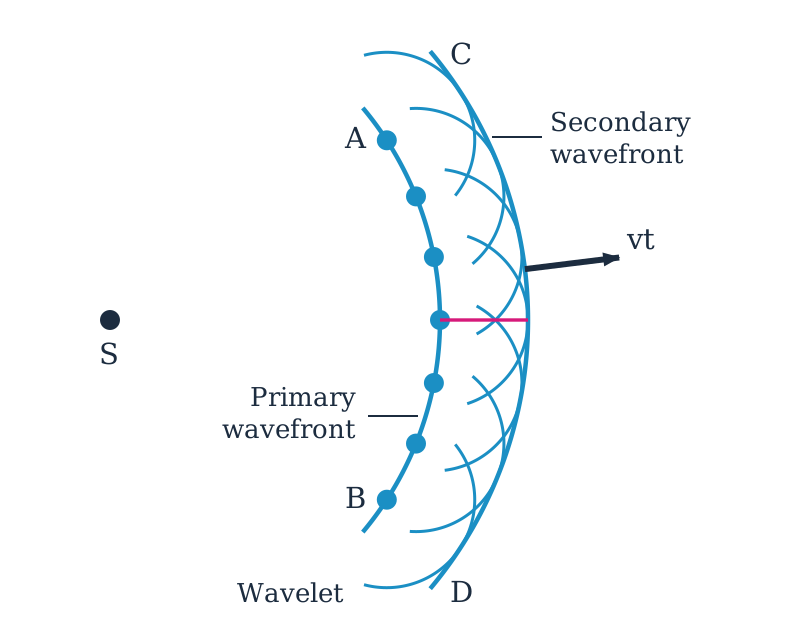
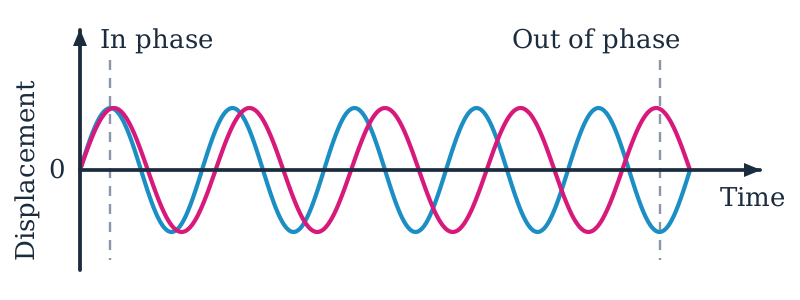
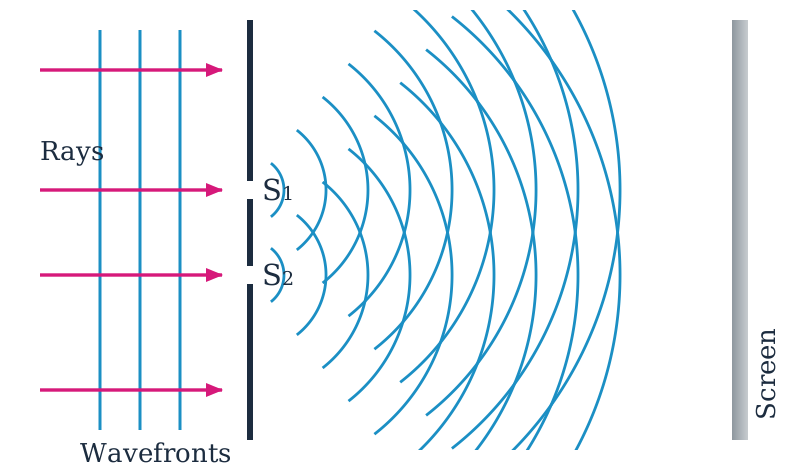
WavefrontA wavefront is an imaginary surface that connects all the points where the waves have the same phase of vibration. | |
Plane WavefrontsRepresented as straight lines, like light waves from the distant stars and water waves in a ripple tank. 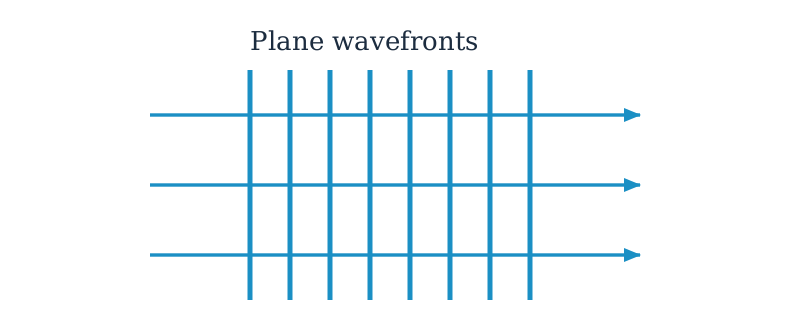 | |
Circular WavefrontsRepresented by circles, as formed in water inside a pond. 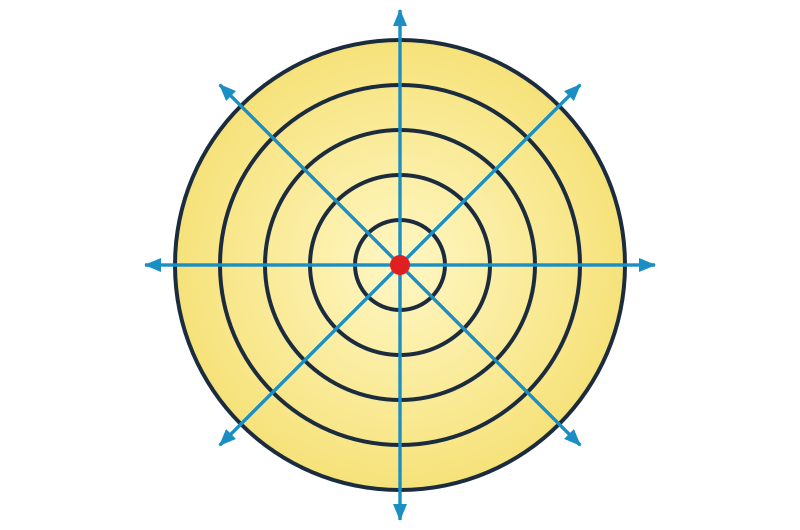 | |
Spherical WavefrontsFormed in three-dimensional space by a sound or light wave. For a point source in space the wavefronts are always spherical, that is they spread out in all directions. 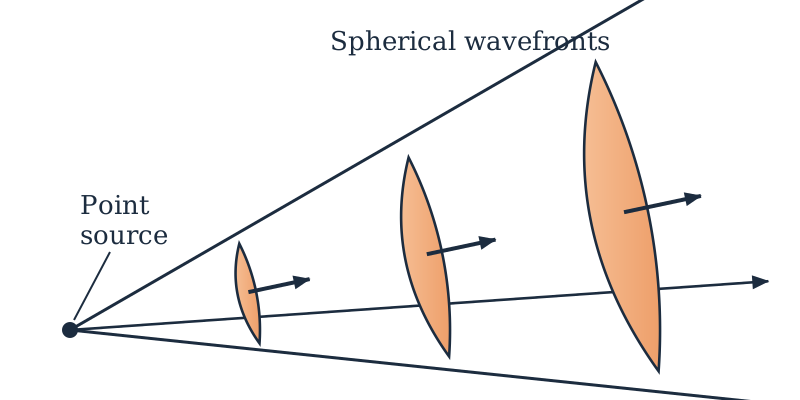 | |
PropertiesFor very large distances, as for the rays coming from the Sun, the wavefronts can be taken as planes. The shortest distance between wavefronts is always equal to the wavelength of the wave. The direction of transfer of energy is always perpendicular to the wavefront at every point. A periodic source produces a succession of wavefronts, all of the same shape. | |
RayA line at right angles to a wavefront which shows its direction of travel is called a ray. | |
Sources of Plane WavefrontsPlane wavefronts are produced by a plane source or by any source at a distant point. A line source, such as the vibrator in a ripple tank, creates wavefronts that are plane and straight in two dimensions. If a source of light is placed at the focal point of a lens, plane wavefronts are formed on the other side of the lens. |
Short Questions
|
SQ 15.1.1
What is a wavefront? Name its three types. |
|||||||||||
|
|||||||||||
|
SQ 15.1.2
What is the distance between two consecutive wavefronts, and in which direction does a wave carry energy? |
|||||||||||
|
|||||||||||
|
SQ 15.1.3
Why are the wavefronts of sunlight reaching the Earth taken as plane? |
|||||||||||
|
|||||||||||
|
SQ 15.1.4
How can plane wavefronts of light be obtained from a point source? |
|||||||||||
|
|||||||||||
|
MCQ 15.1.1
A wavefront joins all the points that have the same: |
|||||||
| A | amplitude | B | speed | ||||
| C | phase of vibration | D | displacement only | ||||
| Solution:By definition a wavefront is a surface of constant phase. | |||||||
|
MCQ 15.1.2
The wavefronts from a point source in space are: |
|||||||
| A | plane | B | straight lines | ||||
| C | elliptical | D | spherical | ||||
| Solution:A point source spreads its waves equally in all directions. | |||||||
|
MCQ 15.1.3
The shortest distance between two consecutive wavefronts is: |
|||||||
| A | half a wavelength | B | one wavelength | ||||
| C | the amplitude | D | two wavelengths | ||||
| Solution:Consecutive wavefronts are one full cycle, one wavelength, apart. | |||||||
|
MCQ 15.1.4
The angle between a ray and its wavefront is: |
|||||||
| A | $90^{\circ}$ | B | $0^{\circ}$ | ||||
| C | $45^{\circ}$ | D | $180^{\circ}$ | ||||
| Solution:A ray is drawn at right angles to the wavefront. | |||||||
|
MCQ 15.1.5
A straight vibrator in a ripple tank produces: |
|||||||
| A | circular wavefronts | B | spherical wavefronts | ||||
| C | no wavefronts | D | plane wavefronts | ||||
| Solution:A line source gives wavefronts that are plane and straight in two dimensions. | |||||||