Waves
WaveA wave is a regular disturbance or variation that carries energy, which spreads out from the source. | |
Energy TransferEnergy is transferred from the Sun to the Earth in the form of light waves, called electromagnetic waves. These waves can even travel through vacuum. | |
In a MediumEnergy is transferred due to the regular and repeated disturbances that travel through the medium, making its particles move up and down or back and forth. | |
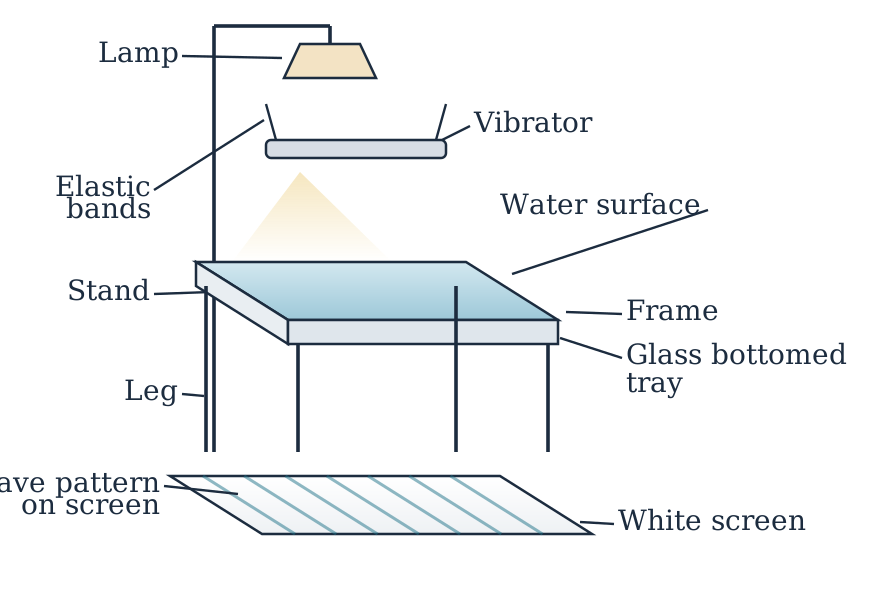
ExampleA stone thrown into a pond produces a disturbance, a ripple, that travels through the water. The water particles only move up and down about their mean positions. The repeating pattern that spreads out is the wave. | |
Diagram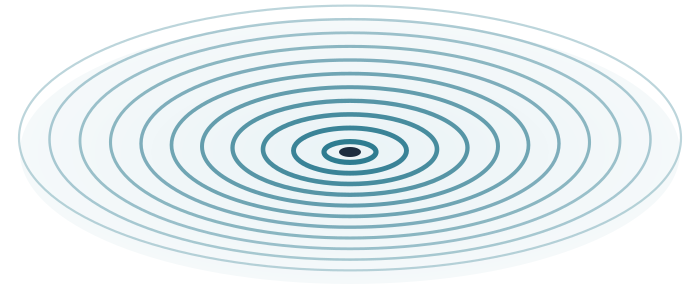 | |
DisplacementThe displacement of a particle of a wave is its distance in a specified direction from its rest or equilibrium position. | |
WaveformWhen the displacement is plotted along the y-axis and the time in the direction of energy travel along the x-axis, the graph obtained is called the waveform. | |
Graph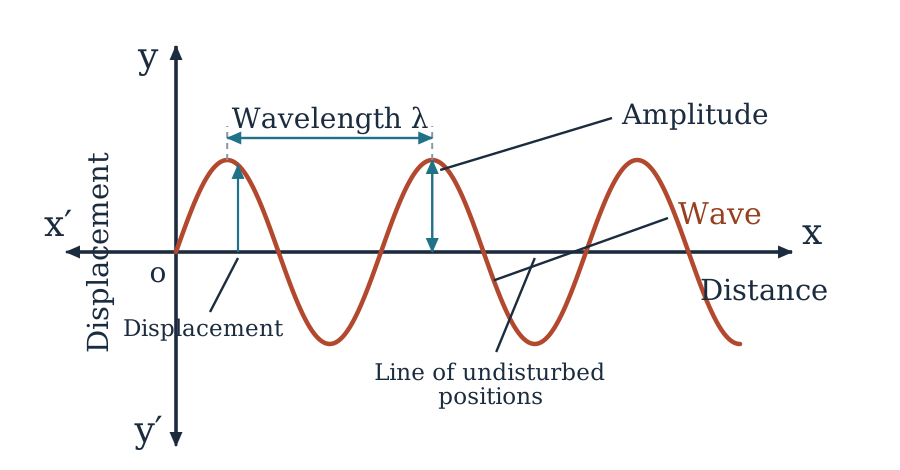 | |
Characteristics of a Wave | |
Amplitude (A)The maximum displacement of the particles of the medium from their equilibrium position. | |
Frequency (f)The number of oscillations or cycles per second. | |
Wavelength (λ)The distance between two consecutive similar points on the wave that are in phase. | |
Period (T)The time taken by the wave to complete one oscillation. It is the reciprocal of the frequency. $$T=\frac{1}{f}$$ | |
Speed (v)The speed at which the wave travels. A crest moves one wavelength $\lambda$ in one period $T$ $$v=\frac{\lambda}{T}$$ Since the reciprocal of the period is the frequency $$v=f\lambda$$ | |
Phase (θ)The relative position of a point on the wave at a given time. | |
Types of Waves | |
Mechanical WavesThey require a physical medium — solid, liquid or gas — to propagate. Water waves, sound waves and seismic waves are mechanical waves. | |
Electromagnetic WavesThey do not require a medium and can travel through vacuum. Radio waves, microwaves, infrared, visible light, ultraviolet, X-rays and gamma rays are electromagnetic waves. | |
Quantum WavesThey are associated with particles such as electrons and photons. Matter waves, also called de Broglie waves, and photon waves are quantum waves. | |
Surface WavesThey propagate along surfaces or interfaces between two media, such as wind-driven ocean surface waves and seismic surface waves. | |
Transverse and Longitudinal Waves | |
Transverse WaveA wave in which the vibrations of the particles are at right angles to the direction in which the energy of the wave is travelling. 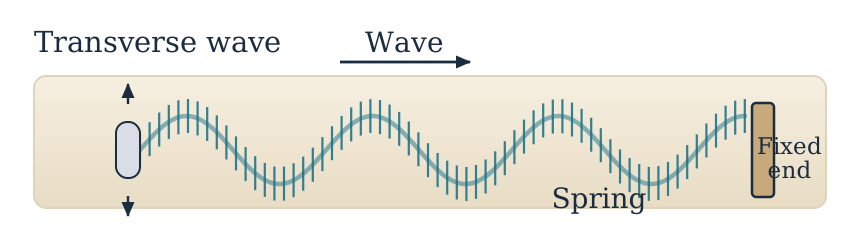 | |
Longitudinal WaveA wave in which the direction of the vibration of the particles is along or parallel to the direction in which the energy of the wave is travelling. 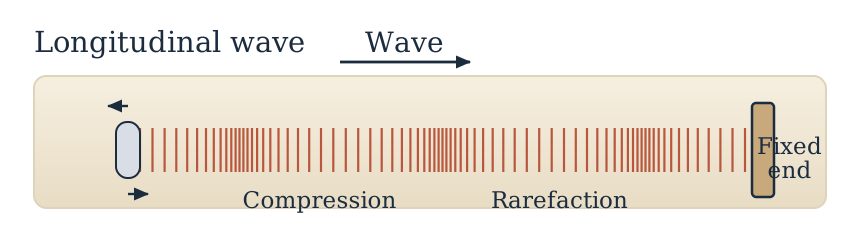 |
Short Questions
|
SQ 7.1.1
A wave transfers energy without transferring matter. Explain this with the example of a ripple on a pond. |
|||||||||||||||
|
|||||||||||||||
|
SQ 7.1.2
Using the definitions of wavelength and time period, obtain the wave speed equation. |
|||||||||||||||
|
|||||||||||||||
|
SQ 7.1.3
What are quantum waves? Give two examples. |
|||||||||||||||
|
|||||||||||||||
|
SQ 7.1.4
Light from the Sun reaches the Earth but sound does not. Why? |
|||||||||||||||
|
|||||||||||||||
|
SQ 7.1.5
A wave of frequency 500 Hz travels with a speed of 340 m s$^{-1}$. Calculate its wavelength. |
|||||||||||||||
|
|||||||||||||||
|
SQ 7.1.6
What is meant by the phase of a wave, and when are two points said to be in phase? |
|||||||||||||||
|
|||||||||||||||
|
SQ 7.1.7
Name the four types of waves classified by their nature, giving one example of each. |
|||||||||||||||
|
|||||||||||||||
|
MCQ 7.1.1
What a wave carries from one place to another is: |
|||||||
| A | matter | B | the medium itself | ||||
| C | energy | D | mass | ||||
| Solution:A wave is a disturbance that transports energy; the particles of the medium only oscillate about their mean positions. | |||||||
|
MCQ 7.1.2
The maximum displacement of the particles of the medium from the equilibrium position is the: |
|||||||
| A | wavelength | B | period | ||||
| C | phase | D | amplitude | ||||
| Solution:That maximum displacement is the definition of the amplitude. | |||||||
|
MCQ 7.1.3
The distance between two consecutive points of a wave that are in phase is its: |
|||||||
| A | amplitude | B | period | ||||
| C | wavelength | D | frequency | ||||
| Solution:Two successive crests are in phase, and the distance between them is one wavelength. | |||||||
|
MCQ 7.1.4
The reciprocal of the time period of a wave is its: |
|||||||
| A | speed | B | frequency | ||||
| C | wavelength | D | amplitude | ||||
| Solution:One cycle takes a time $T$, so the number of cycles per second is $1/T$. | |||||||
|
MCQ 7.1.5
A wave of wavelength 2 m has a frequency of 170 Hz. Its speed is: |
|||||||
| A | 85 m s$^{-1}$ | B | 172 m s$^{-1}$ | ||||
| C | 680 m s$^{-1}$ | D | 340 m s$^{-1}$ | ||||
| Solution:The speed is the product of frequency and wavelength, $170\times2$. | |||||||
|
MCQ 7.1.6
Waves which need no medium to travel are: |
|||||||
| A | mechanical waves | B | surface waves | ||||
| C | electromagnetic waves | D | water waves | ||||
| Solution:Electromagnetic waves travel through vacuum, which is how sunlight reaches the Earth. | |||||||
|
MCQ 7.1.7
De Broglie waves are an example of: |
|||||||
| A | surface waves | B | mechanical waves | ||||
| C | quantum waves | D | electromagnetic waves | ||||
| Solution:Matter waves associated with particles such as electrons are quantum waves. | |||||||
|
MCQ 7.1.8
In a longitudinal wave the particles of the medium vibrate: |
|||||||
| A | at right angles to the flow of energy | B | in circles | ||||
| C | along the direction of the flow of energy | D | not at all | ||||
| Solution:The vibration is parallel to the direction in which the energy travels, giving compressions and rarefactions. | |||||||
|
MCQ 7.1.9
Waves that travel along the boundary between two media are called: |
|||||||
| A | quantum waves | B | surface waves | ||||
| C | electromagnetic waves | D | matter waves | ||||
| Solution:Ocean surface waves and seismic surface waves propagate along an interface. | |||||||